Municipal parking company · 2021–2023
Business system for a parking company
A municipal parking company needed to replace an older internal business system for managing parking rentals, customers and products.
AreasUser insights · User flows · Interaction design · Prototyping · Design systems
This project is based on a real assignment. The client’s identity and the material have been anonymised or simplified for confidentiality.
The interface is shown with anonymised content and an adapted primary colour. The process illustrations are schematic.
About the client
A municipal parking company whose employees manage customers, parking rentals and products in an internal business system. The different parts of the work are closely connected.
The problem to address
An older system needed to be replaced. The new interface had to support many connected workflows, so the work began with understanding the relationships and the order of tasks.
The challenge
How do you make many connected tasks work as a whole?
The main challenge was understanding a large number of connected workflows, rather than simply redesigning individual screens. Managing customers, parking rentals and products needed to work as a whole.
To design the whole system, I first needed to understand the tasks.
Understand the problem
Employees showed how they worked, the tasks they performed and where they encountered problems. This provided a basis for understanding the relationships and structuring the work into separate user flows.
Process & structure
- 01Tasks
- 02Relationships
- 03User flows
The tasks and the relationships between them informed the user flows.
Insights
The new system needed to reflect how employees actually worked, rather than simply recreate the old system's structure.
The complexity became easier to manage when the system was broken down into separate tasks and user flows.
The starting point was employees' tasks and how they connected, rather than the old system's structure.
Key decisions
Work directly in mid-fidelity.
This provided enough structure to discuss functionality, navigation and interaction, while keeping the solution easy to change.
Build a style guide and components from the start.
The scale of the system required a consistent, reusable foundation.
Those decisions needed to work across many different flows.
Process
Process & structure
- 01Workflows
- 02User flows
- 03Mid-fidelity
- 04Refined solution
User flows, mid-fidelity and components provided a shared foundation for refining the solution.
The work behind the screens
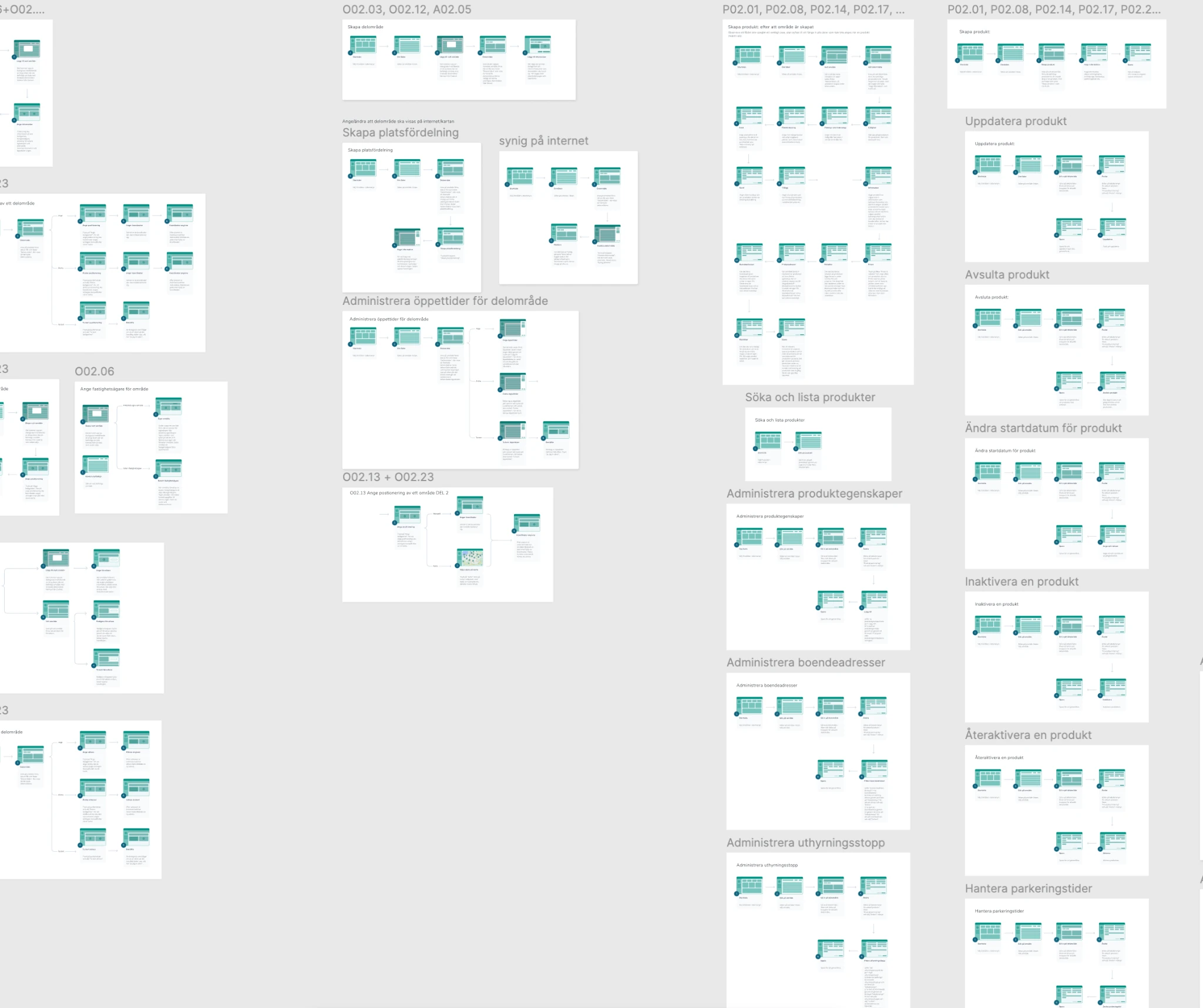
This overview shows roughly one fifth of all the user flows I created for the parking company. The flows describe concrete tasks, including creating and updating products, administering opening hours and managing parking areas.
One task can have several paths
Creating, changing and discontinuing a product are different tasks. I needed to understand what each task required and how it connected to the rest of the system. I therefore worked with flows of screens, steps and branches.
See both the step and the whole
An individual view can be clear while the path through the system is difficult to understand. By arranging views in sequence, I could discuss the transitions: what information is needed next, what choices the user makes and where the flow branches.
Recurring tasks need to feel familiar
The scale of the flows was also a reason to establish components early. Recurring ways to search, select and edit needed a shared foundation, even when the content differed between tasks.
Together, the flows provided a foundation for a connected interface.
Final solution
The final solution brought a large number of internal workflows together in a connected system for managing customers, parking rentals and products.
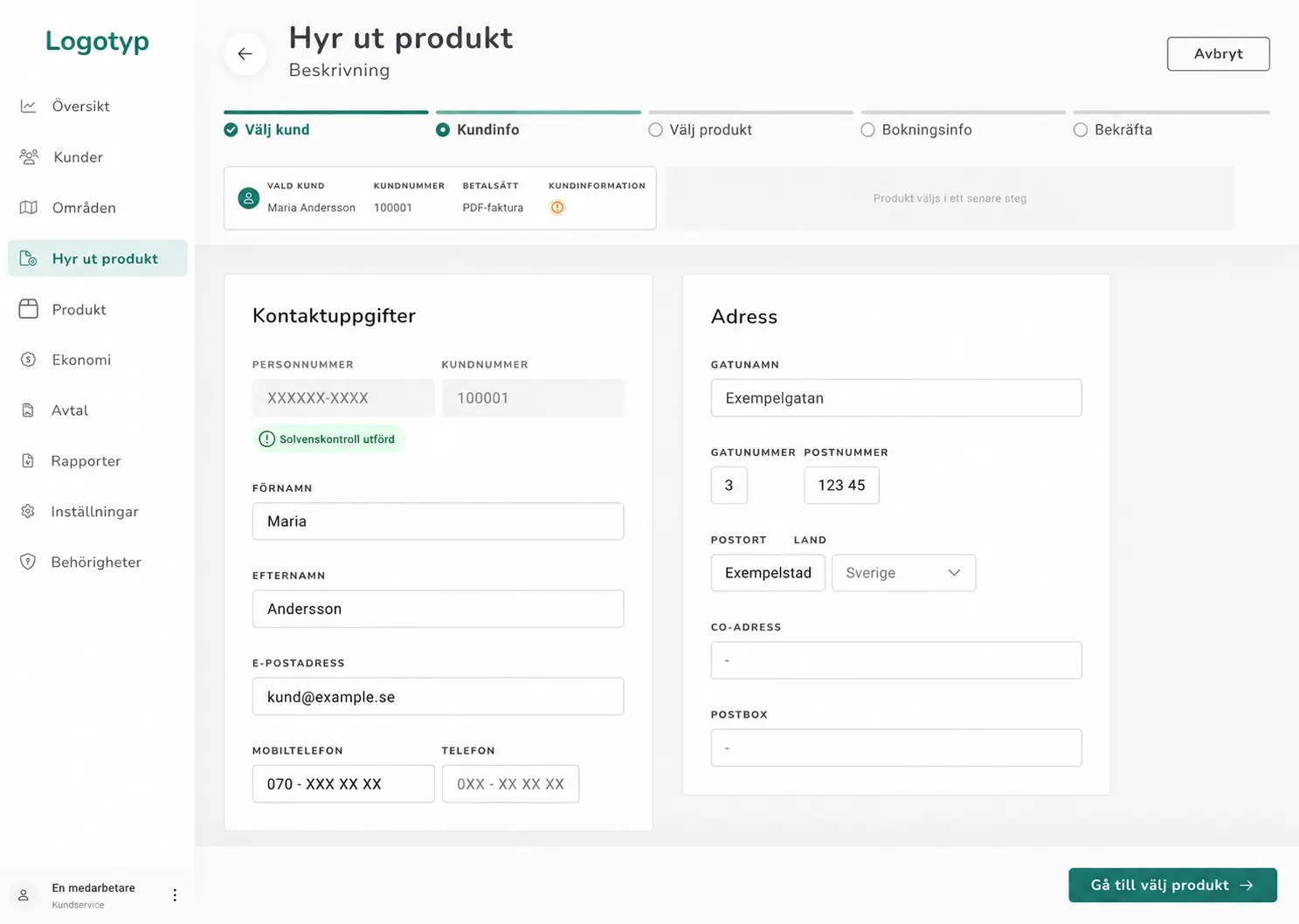
The solution brought customer, parking rental and product management together in a connected system.
Reflection
This was one of my earlier large UX projects. With the experience I have today, I would have pushed harder for direct, independent contact with end users. I would also have built a more developed design system with today's experience and possibilities.
Good UX research is not only about methods. The conditions for conversations also affect what you can learn from users.