Insurance organisation · Preliminary study · 2025
Procurement process feasibility study
Map a complex tender process and propose a new, more automated workflow with consolidated information and better traceability.
AreasUser insights · Process mapping · User flows · Solution proposals · UX/UI
This project is based on a real assignment. The client’s identity and the material have been anonymised or simplified for confidentiality.
The interfaces use sample data. They are design proposals from the 2025 preliminary study and do not show the organisation’s current systems.
About the client
An insurance organisation that prepares tenders for insurance procurement. The work involves customer information, calculations and tracking tenders.
The problem to address
Information was spread across several systems and had to be transferred manually. The preliminary study explored how the work could connect more effectively, with less duplication and a consolidated overview.
The challenge
Which steps are needed for the work — and which exist because the systems are disconnected?
The tender process was complex and fragmented. Employees worked in several systems and had to transfer information manually between them.
- Time-consuming manual work and fragmented workflows.
- Risk of errors when the same information was entered into several systems.
- No consolidated, searchable database for follow-up and information retrieval.
- Static calculation methods that limited efficiency and accuracy.
The first step was to understand how the work actually happened.
My role
My work involved listening to users and understanding how they worked: the steps they performed, how the systems connected and where things became difficult.
I mapped the existing, highly complex flow and then proposed a new workflow. The focus was on reducing manual work, consolidating data and improving traceability.
The mapping became the foundation for a new direction.
From current process to proposal
The central problem was not limited to individual screens. Information and tasks were spread across several tools. The proposal therefore needed to address the entire workflow.
Current process
- Bid informationOne source
- Customer informationAnother source
- DocumentsFurther supporting material
Information has to be retrieved and transferred between systems.
Status has to be checked in several places.
Proposed direction
- 01A shared overviewTenders and their status are brought together in one place.
- 02Material is linked to the caseCustomer information and documents are kept in context.
- 03Work in a connected workflowThe proposal reduces the need for manual transfers.
- 04Track status and historyThe work becomes easier to search and track.
What needed to change
- Duplicated work
- Fragmented information
- Limited overview
I looked at where information had to be transferred and what context was lost between systems. The proposal therefore brings the case material together and makes status visible where the work happens.
The complete workflows contain more steps and branches. This simplified selection highlights the problems in the existing process and what the proposal aimed to improve.
How the current process informed the proposal
I started with users' everyday work. What did they need to do, what information did they need and where did they have to transfer it manually? Mapping helped me distinguish business needs from steps created by disconnected systems.
Bring information together where the work happens
When the same information is handled in several places, simplifying a form is not enough. The proposal needed to consolidate information and reduce the need to enter it again.
Two levels of overview
The overview shows tenders and their status for day-to-day work. The customer view brings together information and tenders for a specific customer. They address different needs: seeing what needs attention and understanding the context of an individual case.
Make the proposal possible to discuss
The interface proposal gave a concrete picture of how the new workflow could work. Consolidating information was a direction in the preliminary study; which steps can be automated also depends on business rules and technical conditions.
The next step was to show how this could work in the interface.
Interface proposal
I started from the interviews and the mapped workflows. Information was scattered, and employees had to move between several systems to get the full picture.
I therefore designed a shared overview of bids and their status, and a customer view that brings together customer information and related bids. These views show how the proposed workflow could work in the interface.
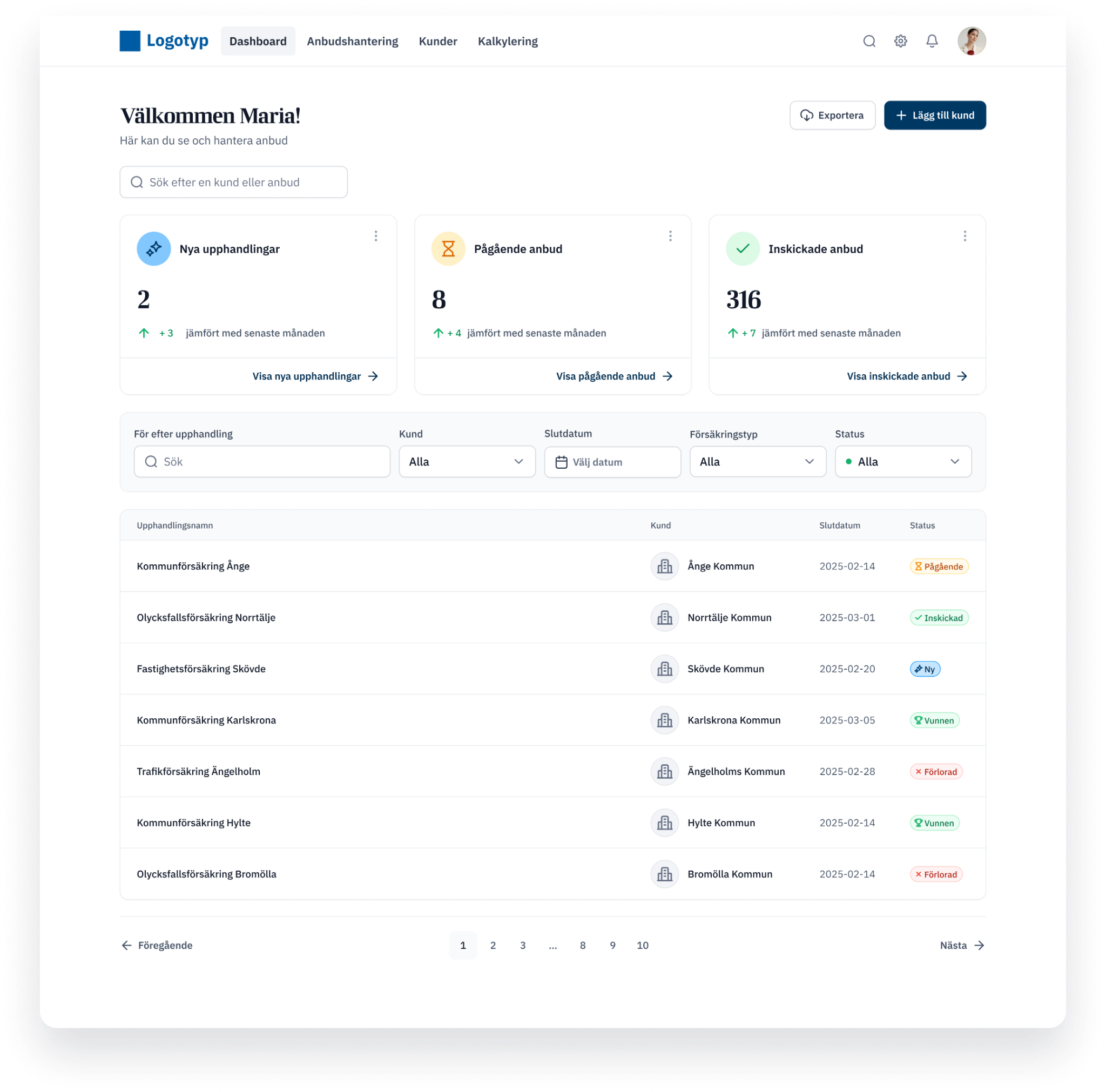
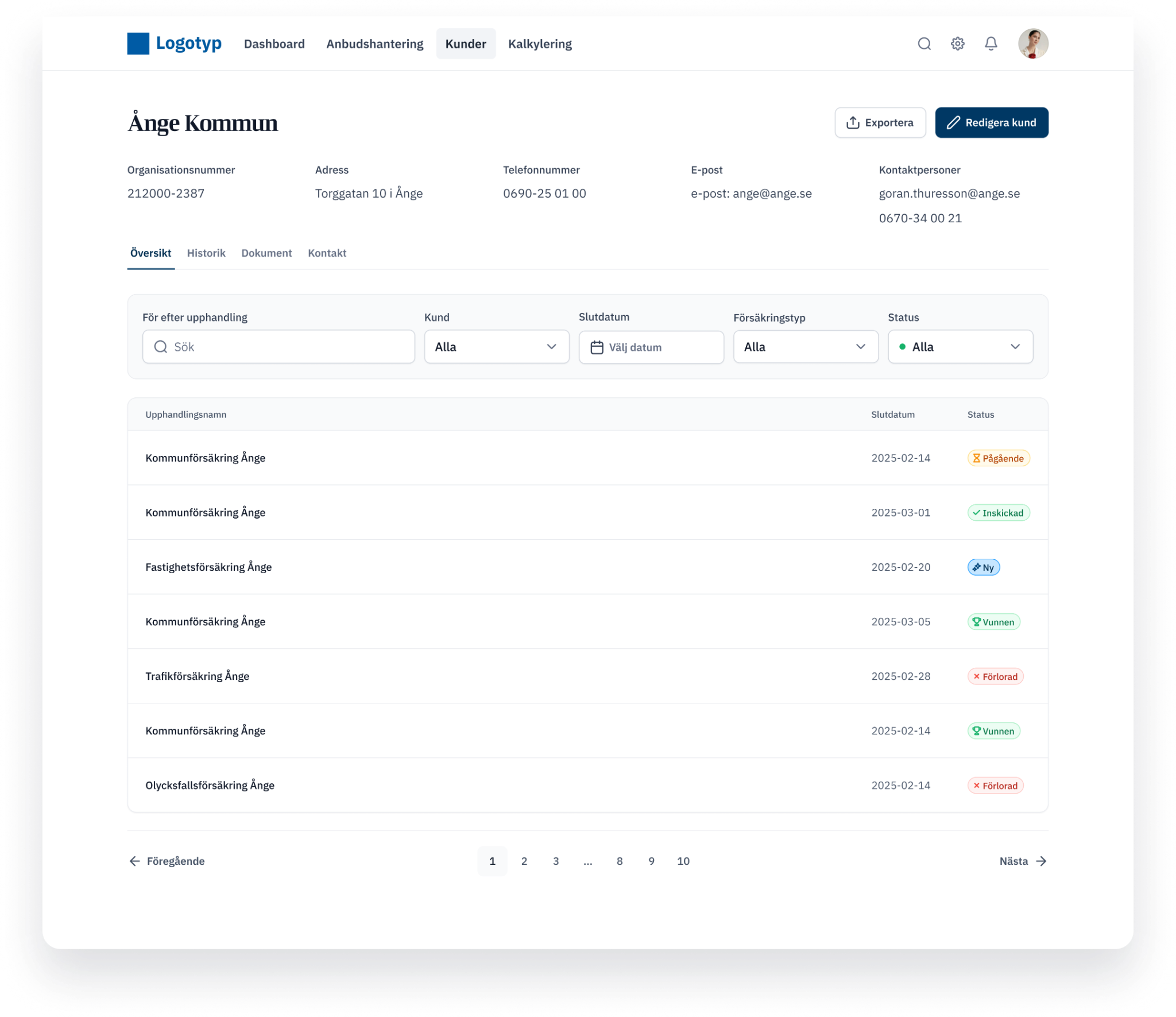
The views make the preliminary proposal concrete. They show how tenders, status and customer information could be brought together.
The proposal's goals
The new workflow aimed to reduce manual work and error risk, improve data quality and make follow-up easier.
- Less duplication and faster processes.
- Consolidated, searchable information with better traceability.
- Better support for decisions, reporting and compliance.
The delivery was a preliminary study with a mapped current process and a proposed new workflow. I do not know how the material has been used or whether the proposal was implemented after delivery. The improvements above are goals for the solution, not measured outcomes from a launched product.